
Caring for a new fence
Your new fence looks a bit green, has a few cracks and you’re not sure when to stain it? All normal. Here’s what to expect, and how to help it last.
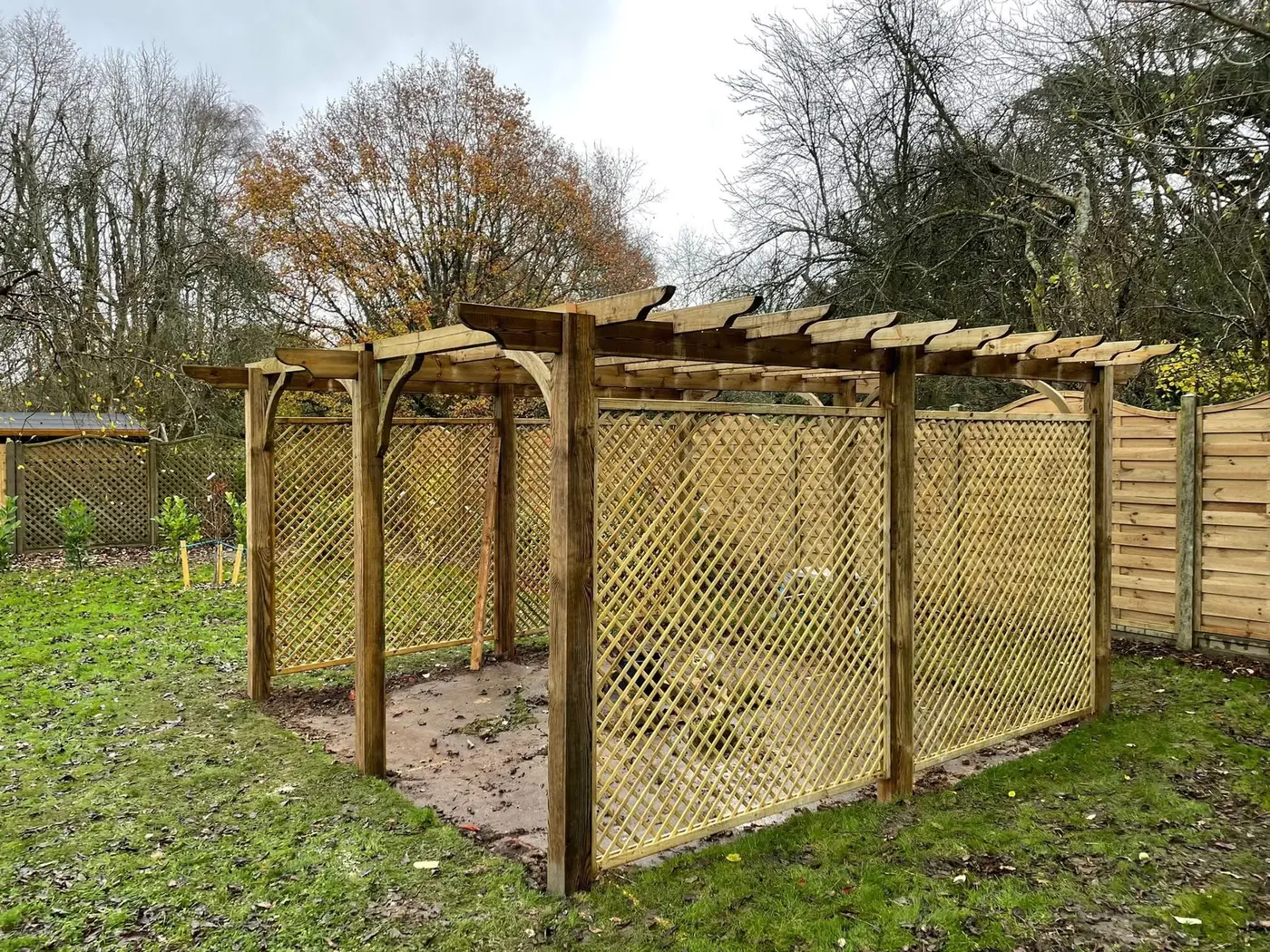
This is general guidance for pressure-treated timber fencing. If you used a stain or paint, follow the maker’s instructions on the tin.
Why it looks green
Pressure-treated timber often comes out with a green or brown tint. That’s the preservative, which has been forced deep into the wood. It isn’t mould and it won’t harm plants once it’s dry. Over the first months outside, the colour fades and the timber slowly weathers to a silvery grey.
Cracks, resin and damp
- Small cracks along the grain (called shakes) open up as the timber dries. They are normal and don’t make the fence weaker.
- Sticky resin can weep from knots on hot days. Let it harden, then scrape it off. Don’t wipe it while it’s soft.
- New timber can feel damp for a while after treatment. It dries out in the open air.
When to stain or paint
Treated timber doesn’t need staining to last, so colour is up to you. If you do want to stain or paint it, wait until the wood has properly dried out, which can take a few months for freshly treated timber. A simple test: sprinkle some water on it. If the water soaks in, it’s ready. If it sits in beads, give it longer.
Use a water-based fence stain or paint made for treated timber, and do it on a dry day. Avoid anything that seals the surface like a varnish, because it can trap moisture in the wood.
Treat any cut ends
If you cut or drill treated timber yourself, for example when you put up materials from our yard, the fresh wood inside hasn’t had the full treatment. Brush an end grain preserver onto every cut and hole, especially anything that goes in the ground.
Habits that help it last
- Keep soil, compost, bark and leaves from piling up against the boards. Gravel boards along the bottom help with this.
- Don’t let heavy climbers or ivy take over the fence. They hold moisture and add weight in the wind.
- Point sprinklers away from the fence, and keep gutters and downpipes from running onto it.
- Skip the pressure washer. A soft brush and water is kinder to the timber.
- Walk the fence after a storm and look for leaning sections or loose boards. Our storm-proofing guide has a checklist.
Most of how long a fence lasts comes down to the posts. Ours are kiln dried, fully incised and treated to highway spec for ground contact. Read more about our timber.
Quick answers
Why is my new fence green?
Pressure-treated timber often has a green or brown tint from the preservative. It isn’t mould. It fades over the first months and the timber weathers to a silvery grey.
Do I need to treat a new pressure-treated fence?
No. The preservative is already deep in the wood. Staining or painting is for looks. The one thing to treat is any cut end or drilled hole, with an end grain preserver.
When can I stain a new fence?
Once the timber has dried out, which can take a few months for freshly treated wood. If water sprinkled on it soaks in rather than beading, it’s ready.
Is it normal for new fence boards to crack?
Yes. Small cracks along the grain open up as the timber dries. They are normal and don’t weaken the fence.