
Closeboard or panels? An honest comparison
Two of the most popular garden fences, compared on strength, cost, looks and repairs.
The short answer
For a long, exposed or boundary fence, closeboard is usually the better buy. For screening, style, or a quick replacement, panels do the job well. Here’s how they compare.
| Feature | Closeboard | Fence panels |
|---|---|---|
| How it’s built | Built in place: posts, rails and overlapping featheredge boards | Ready-made panels slotted or fixed between posts |
| Strength in wind | Very strong, as the rails are fixed into the posts | Good, best with concrete posts on exposed sites |
| Upfront cost | Usually more | Usually less, and quicker to put up |
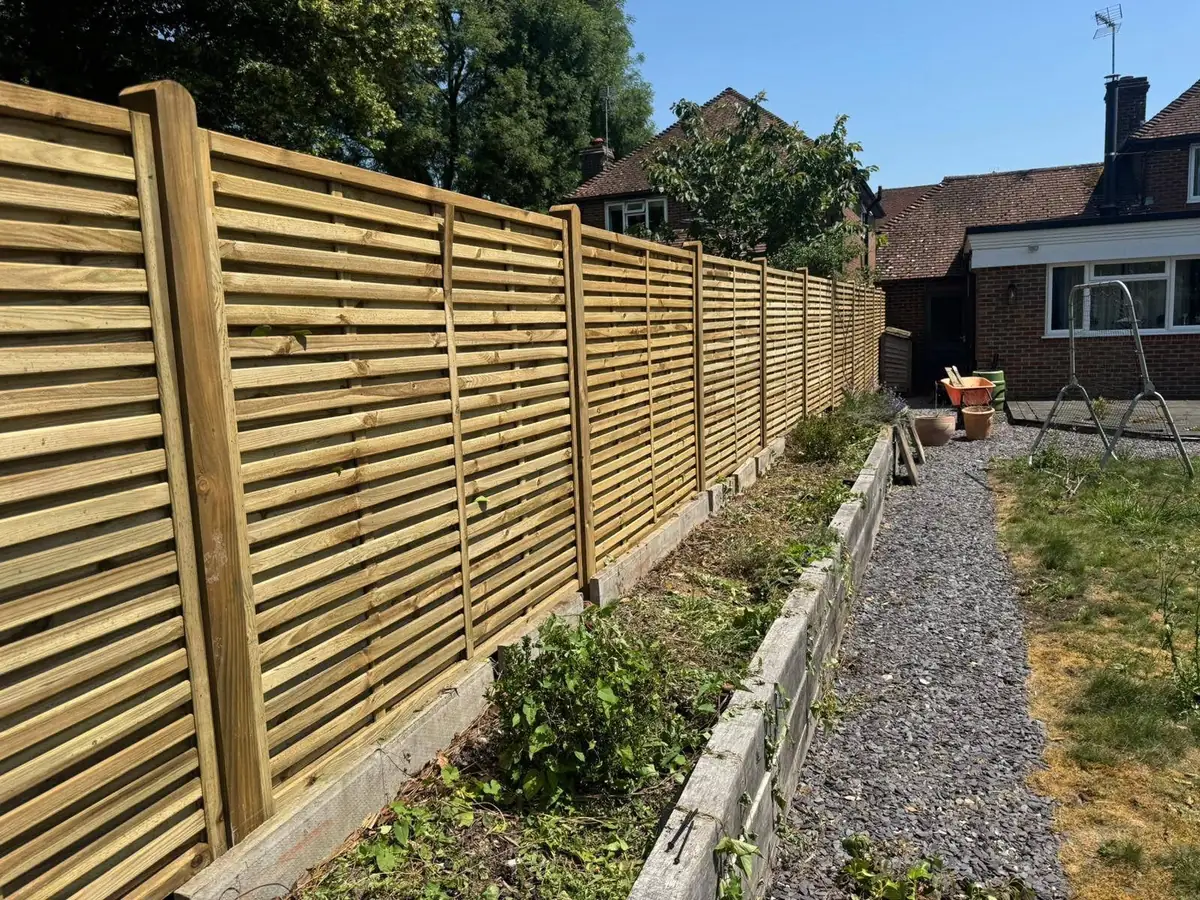
| Looks | Classic, solid timber boundary | Lots of styles: Venetian, waney edge, hit & miss, tongue & groove |
| Sloping ground | Follows slopes well | Stepped down the slope |
| Repairs | Single boards or rails can be replaced | A damaged panel is swapped as a whole |
When to choose closeboard
Back-garden boundaries, exposed spots, long runs and sloping gardens. Because it’s built on site, it fits the ground and stands up well to wind. See privacy & closeboard fencing.
When to choose panels
Screening a patio, a contemporary look, or replacing a few panels in an existing run. Panels are quicker to fit, and you can buy them from our yard if you’d rather put them up yourself. See fence panels and fencing supplies.
Whichever you pick, get the posts right
Both kinds of fence are only as good as the posts and how they’re set. Read about our timber, and how to storm-proof a fence.